Most advice on how to write an investor update is a list of sections. That's useful once. The hard part isn't knowing the sections. It's sitting down every month and getting from a messy close to a page you're happy to send, without it taking an afternoon.
For years I'd open a blank document, start with "Hi all," and write until it felt long enough. The numbers ended up at the bottom, the miss ended up in paragraph four, and I'd send it two weeks late. What fixed it was doing the same steps in the same order every month. Here they are.
Step 1:
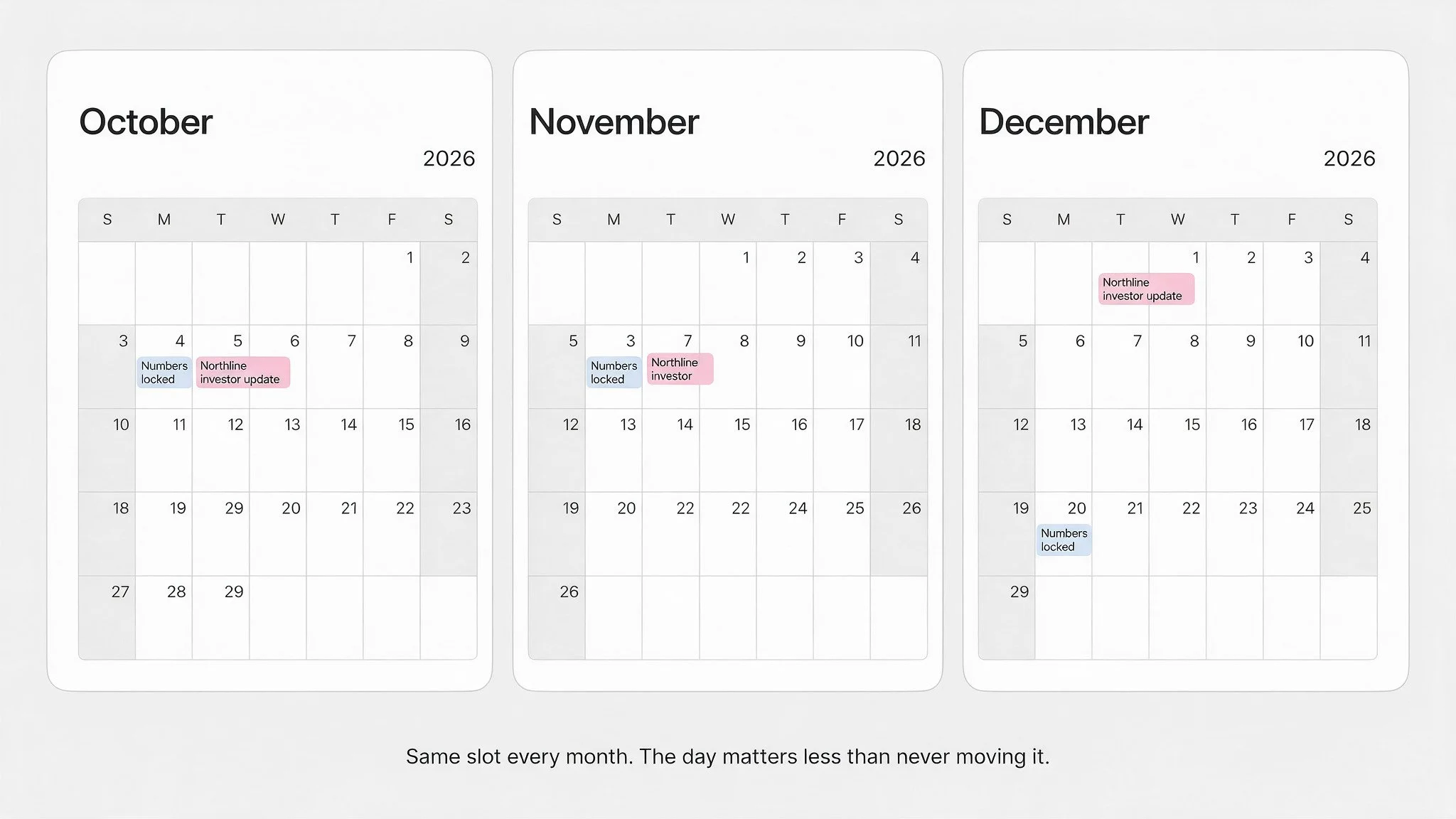
Pick your send date and work back from it
Choose one working day early in the month and put it in your calendar for the next twelve months. Everything else hangs off that date. Numbers need to be close enough to trust a few days before it; the draft needs a slot the day before.
If you're unsure on monthly versus quarterly, I've written about how often to send investor updates. For most early-stage companies, monthly.
Step 2:
Start from last month's update, not a blank page
Open last month's update first. It's the best template you have, because investors already know its shape. Look at three things:
the numbers you reported, which become this month's "last month" column
the priorities you said you'd work on, each of which needs a done, slipped or dropped
the ask, and whether anyone helped
If this is your first update, start from a monthly investor update template and keep that layout from here on.
Step 3:
Pull the same numbers, the same way
Get the same short list of metrics as last month, defined the same way: usually revenue, burn, cash and runway, plus the one or two numbers that drive your business. Don't swap metrics because this month's look better. Investors notice the switch more than the dip.
Put three figures side by side for each: this month, last month, and plan. Plan is the column most founders leave out, and it's the one that makes a number mean something.
Step 4:
Write the two-sentence summary first
Before anything else, write two sentences: what happened this month, with the number, and whether you're on plan, with runway. Some investors read only this. Write it to be enough.
If the month missed, the miss goes here, in plain words. Not later, not softened. (More on that in how to write an investor update with bad news.)
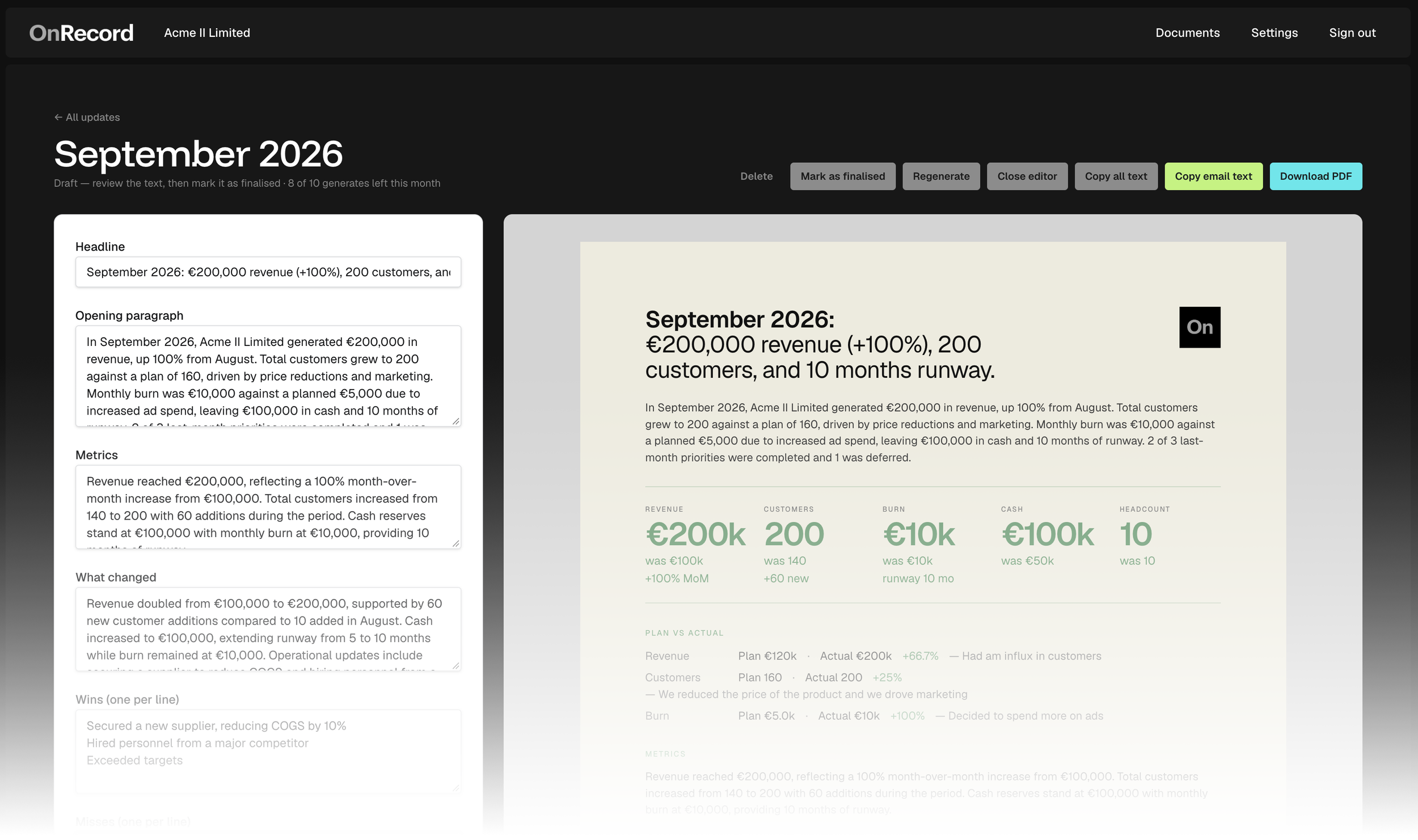
Making edits to an OnRecord investor update after OnRecord has built the draft.
Step 5:
Explain only what moved
Go down your numbers and write one line for anything that moved meaningfully against plan, up or down. What changed, and why. If a number is on plan, it doesn't need a sentence.
This is where updates bloat. Resist the urge to narrate the month. Investors want the reason a number moved, not the story of your weeks.
Step 6:
Close out last month's priorities, then set next month's
Take the priorities from last month and mark each one: done, slipped (with the new date), or dropped (with one line on why). Then write three or fewer for next month.
This is what turns a series of updates into a record. When an investor can see that you did what you said, or said plainly when you didn't, they trust the next page more.
Step 7:
Make one ask, or none
One specific request someone could act on or forward: an intro to a named type of person, a candidate for a named role, a customer reference. If you have nothing specific, leave the ask out. "Any intros welcome" teaches investors to skip the section.
Step 8:
Cut to one page, then send
Read it once as an investor would, on a phone, between meetings. Cut anything that's there to fill space or to look busy. If it doesn't fit on a page, the extra is usually explanation that belongs in a reply if someone asks.
Then send it on your date: the page attached, two-sentence summary in the email body, every investor in BCC or sent individually. Answer replies one to one, and note anything that was unclear for next month.
A filled-in example
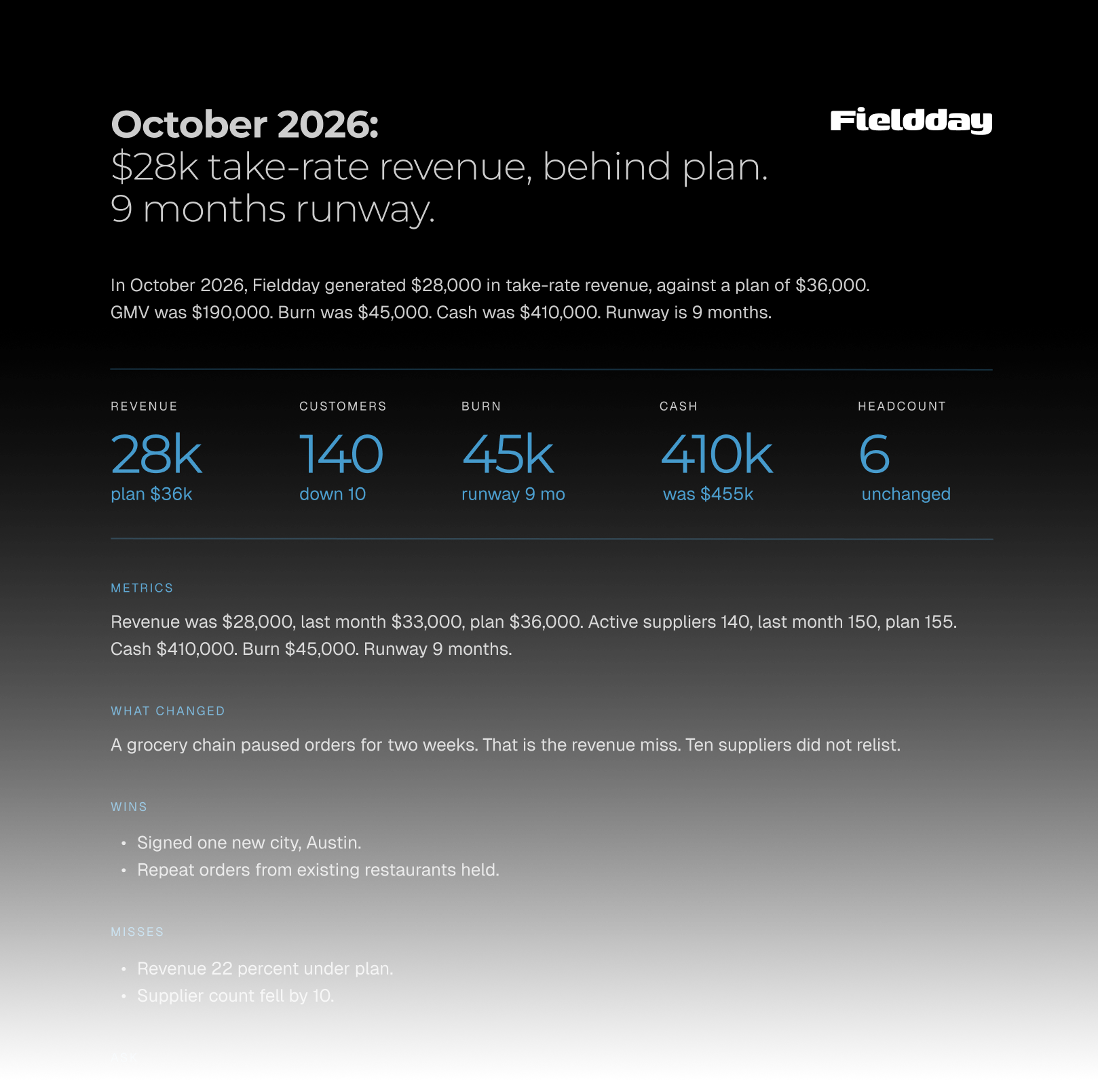
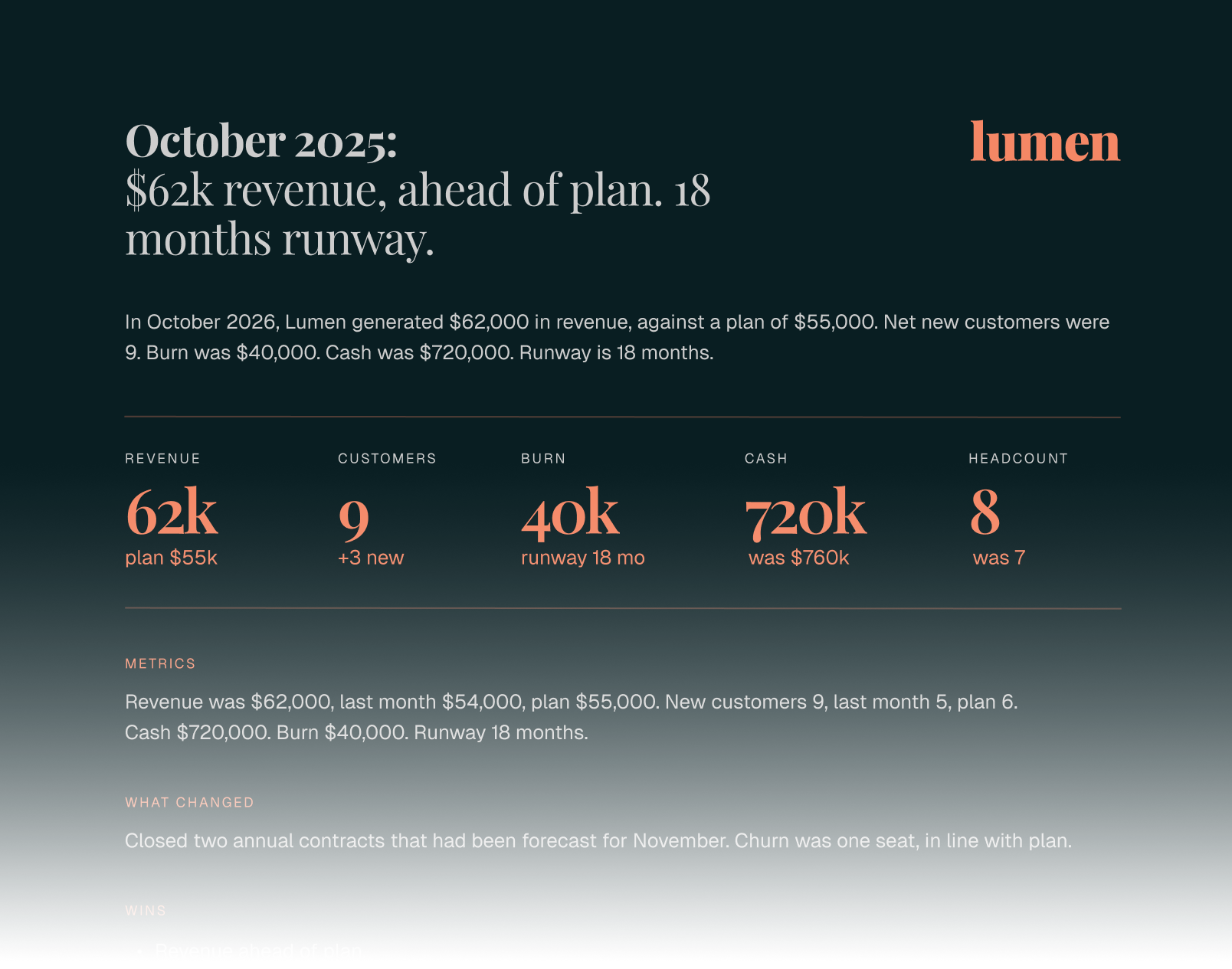
This is fictional. Northline is the made-up company from our investor update example, and the numbers are invented to show the format.
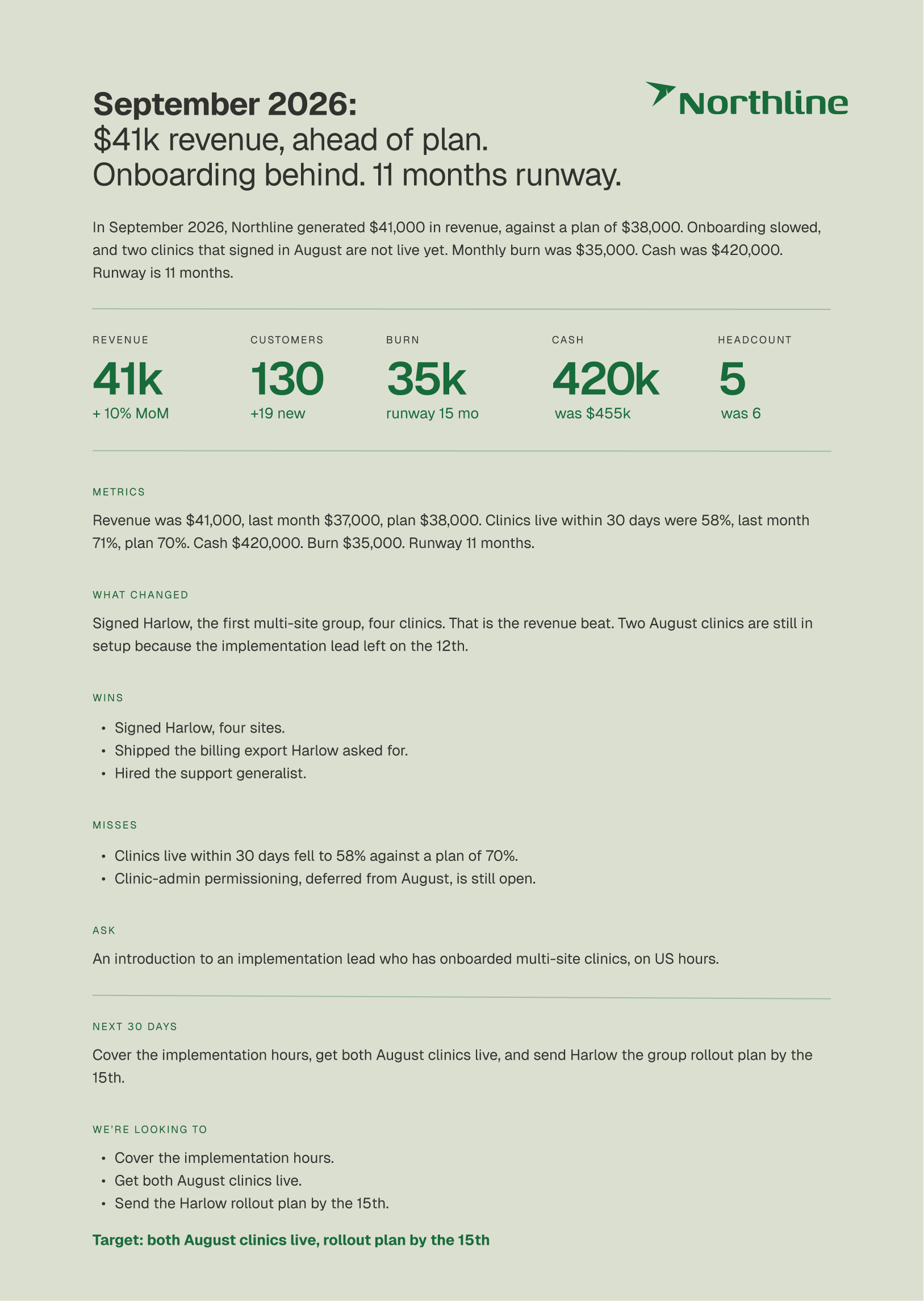
Sample 1-pager investor update
That's the whole thing: a two-line summary, the key numbers with last month and plan beside them, what changed, wins and misses, one ask, and next month's priorities. One page.
Mistakes that make it take longer
Writing the email first. The email is two lines and an attachment. Write the page, then copy the summary across.
Waiting for a better month. A late update reads worse than a bad one. If the month missed, send it on time and say so.
Changing the layout. Every change makes investors relearn the page. Keep it the same, month after month.
Sending more to compensate. I used to attach a deck as well. Investors wanted a page.
If you're not sure which sections belong on the page, that's covered in what to include in an investor update. This post is just the routine for getting it written.
Questions people ask
How long should it take to write an investor update?
Once the routine is set and your numbers are ready, well under an hour. Most of the time goes on finding last month's numbers and priorities, which is why step 2 matters.
Should I write it differently in a bad month?
No. Same layout, same length, same send date. The miss goes in the summary.
Who should write it: me or my CFO?
The founder or CEO should own the words. A CFO or accountant can pull the numbers.
What if I've missed a few months?
Send this month's update now, with one line owning the gap and the date the next one will arrive. If that's where you are, the investor update I kept avoiding is for you.
I built OnRecord after years of doing this the hard way – putting investor comms off, then overbuilding them to compensate. What they wanted, and what I later understood as an investor myself, was a single-page update I could send without the drama – including just the essentials: last month still on the record, the key numbers (next to the plan), and nothing written to fill the space. That’s what OnRecord does. A monthly update for investors, shareholders and anyone else who needs the same picture – made in ten minutes. Try for 60 days free – that’s 2 free monthly updates. Your investors will love you for it!
All the info they want, nothing they don’t.