
Investors don’t want a better story.
They want a page they can finish between meetings.
I learned this the expensive way – first by sending fifty-page decks as a founder, then by writing shareholder packs at a bank, then by sitting on the other side of the table. The letters I actually read had the same six things. The rest I skipped.
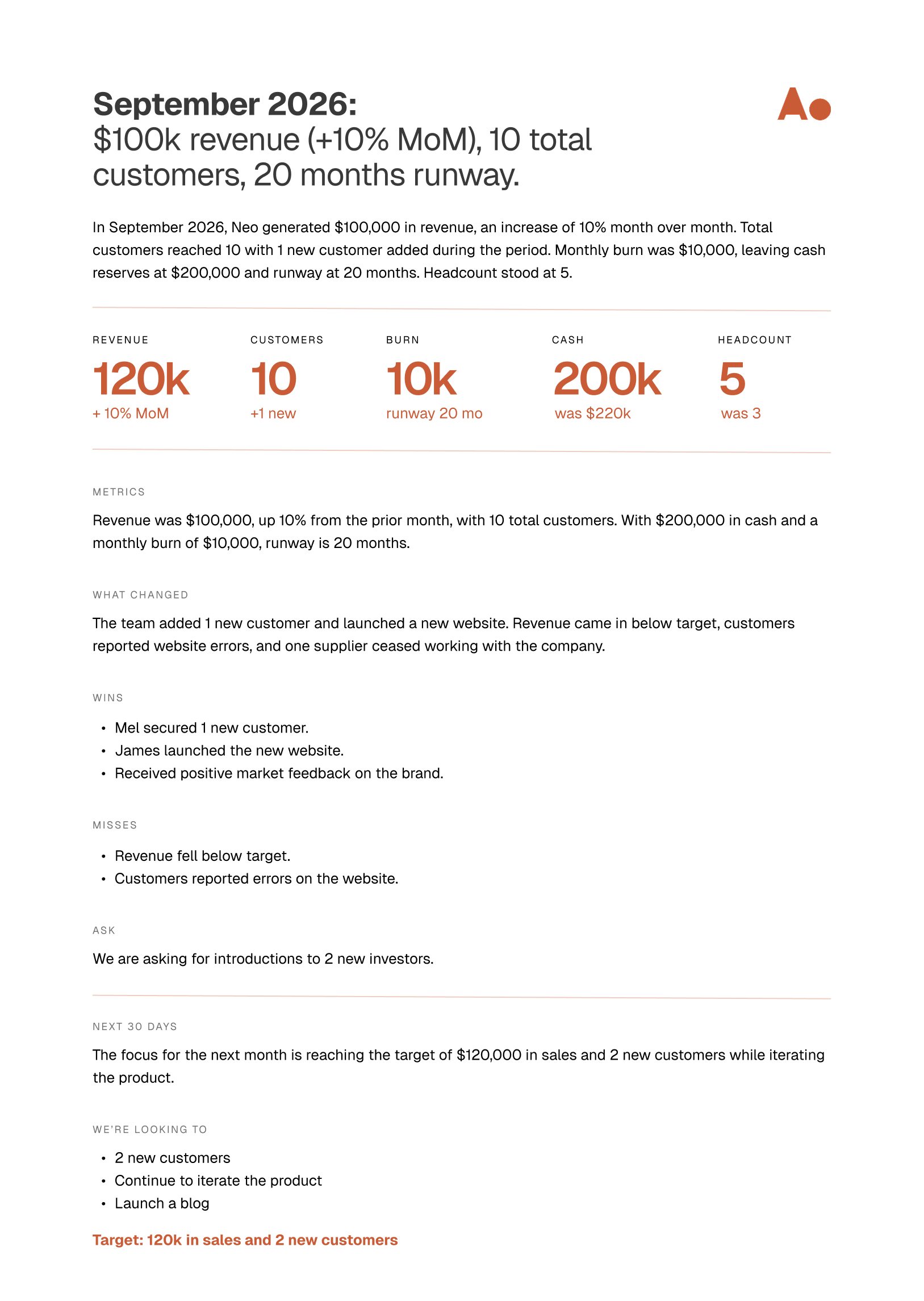
Sample investor update template
If it isn’t one of these, it doesn’t need to be on the page.
1. Plan vs actual
This is the sentence they look for first.
What did you say you’d hit. What did you hit. Side by side, same layout every month, so they don’t have to hunt.
A paragraph about “strong progress” is not plan vs actual. A number next to a number is.
2. Why it moved (if it moved)
If actuals miss plan by about 10%, add one reason.
Not a defence. Not three causes and a silver lining. One plain sentence.
We missed because enterprise deals slipped into next month. Two of four are signed.
That’s enough. Hiding the gap trains them to discount the rest of the page.
3. Cash
Runway. Cash in the bank. Burn, if you know it.
Don’t bury it in a footnote and don’t dress it up. They are reading this line whether the month was good or not. Put it where they don’t have to look.
4. Last month’s list – done or deferred
Every promise you made last month stays on the page until you tick it or defer it.
Done. Deferred, with one line on why. Not deleted because it became awkward.
This is the part a new doc every month drops. It’s also the part that builds or burns trust. They remember what you said. The page should too.
5. Next 30 days
A short list. The things you will actually try to do.
Not a vision slide. Not a year-long roadmap. Thirty days. If it won’t fit in five lines, it isn’t a monthly list.
6. An investor ask (if you have one)
Intros. A hire. A follow-on. Help on a deal. Either way, from my experience, investors love to help… I know I do.
If you don’t have an ask, leave it off. Empty fields stay off the page. A fake ask is worse than no ask.
What stays off
No board pack.
No puff paragraph at the top.
No designed appendix.
No cover email that pastes the whole letter.
The cover note is an intro. The PDF is the page. Notes get tightened into short sentences – and you still approve every line. Nothing gets invented to fill space.
How I write it now
I don’t start from a blank page.
I fill a short form: numbers, what changed, last month’s list, cash, next 30 days, optional ask. OnRecord turns that into one page, in our logo and type. I edit every line. I download the PDF. I send a three-line cover note.
You can do the same list in a doc this afternoon. The product exists, so next month the plan and the promises are still sitting there.
That’s the whole page. Six things. Send that, and you’ve done the job they actually hired the email to do.
I built OnRecord after years of doing this the hard way – putting investor comms off, then overbuilding them to compensate. What they wanted, and what I later understood as an investor myself, was a single-page update I could send without the drama – including just the essentials: last month still on the record, the key numbers (next to the plan), and nothing written to fill the space. That’s what OnRecord does. A monthly update for investors, shareholders and anyone else who needs the same picture – made in ten minutes. Try for 60 days free – that’s 2 free monthly updates. Your investors will love you for it!
All the info they want, nothing they don’t.


